GPR for Utility Locating: Should You Buy, Rent, or Hire a Pro?

January 9, 2026

Share this Article:

Locating underground utilities is one of the highest-stakes parts of the job. A single hit can throw off schedules, damage equipment, or endanger the crew. Ground penetrating radar helps reduce those risks through clearer visibility before anyone breaks ground. Figuring out if it makes more sense to buy your own, rent as needed, or bring in a specialist depends on how often you scan, how fast the job is moving, who’s running the tool, and how much risk you’re willing to carry if something goes wrong underground.

When to Use GPR for Utility Locating Jobs

GPR for utility locating is most useful when records are incomplete or conditions raise the chance of a hit. It’s especially common in older areas, active sites where utilities overlap, or locations near sensitive infrastructure.

You’ll also see it used before saw cutting, coring, or directional boring, particularly when there’s a chance of hitting something that shouldn’t be hit. If the job involves private utilities, post-tension cables, or old foundations, ground penetrating radar offers more detail than standard locates and helps crews work with more confidence.


It isn’t always required, but on high-risk projects, it adds a layer of certainty. When the margin for error is small, getting a clear look underground becomes a practical decision, not just a precaution.

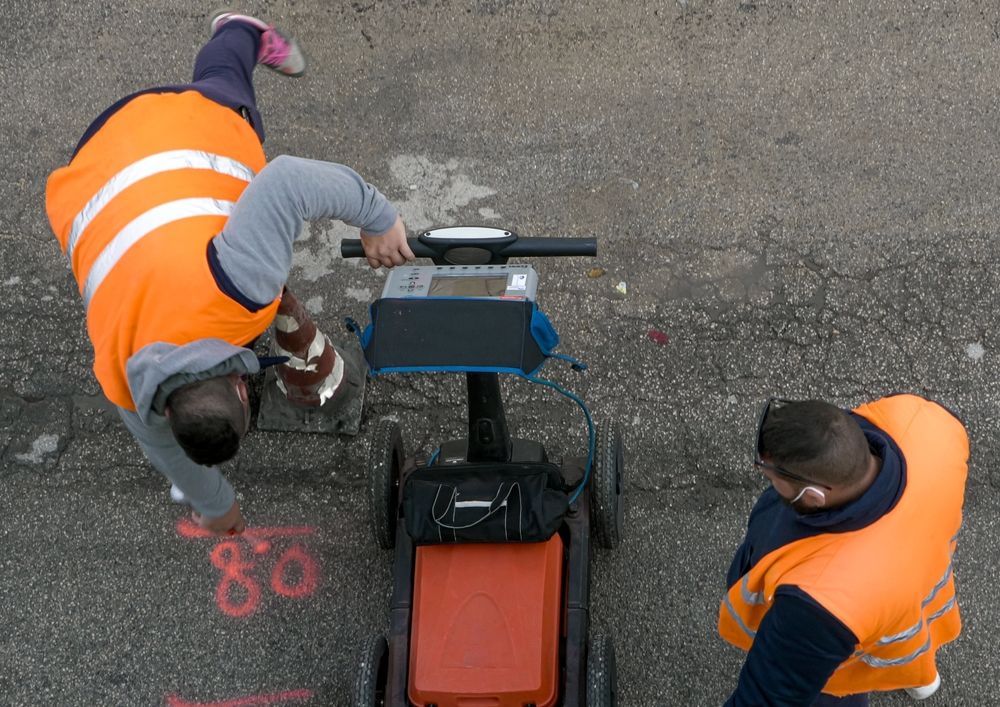
Two people in orange vests use ground-penetrating radar on asphalt. One marks the ground with pink paint.

Buying GPR Gear: Worth It for Frequent Use?

For teams that regularly perform utility locating or subsurface imaging, owning a ground-penetrating radar system can make financial and logistical sense. If you’re asking, should you buy GPR, frequency, or internal responsibility matter most? Ownership gives you more control over scheduling, reduces reliance on third-party locators, and keeps scanning in-house.


But the investment goes beyond the scanner itself. There’s training, calibration, maintenance, and software to consider. Not every team has the bandwidth to handle all of that on top of the work they’re already doing.


If scanning is part of the daily workflow, especially on large projects or sites that require repeated checks, owning the equipment can pay off quickly. Just make sure the crew using it is properly trained and knows how to read the data accurately. Having the right tool only matters if it’s used the right way.

Renting a GPR Scanner for Short-Term Needs

Renting ground penetrating radar works well for short-term projects or one-off utility locating jobs where buying equipment isn’t practical. Many contractors rent GPR when scanning is occasional or tied to a single phase of work. You get access to reliable gear without a high upfront cost, and you only pay for the time needed.


Rental also lets you try out different systems before committing to a purchase. The key is making sure someone on the crew knows how to operate the scanner and interpret the data. Some rental providers offer quick-start training or support, but that varies.


If time is tight and accuracy matters, it makes sense to bring in a trained technician. Renting solves the equipment need, but not always the skill gap.

Why Hire a Pro for Subsurface Imaging Work

Hiring a professional for ground penetrating radar work takes the pressure off your team and puts the job in experienced hands. Trained GPR technicians understand how to adjust the settings based on soil conditions, material types, and depth requirements. They also know how to read subtle patterns in the data that less experienced users might miss.


This reduces the chance of misreads, especially in complex or congested areas where accuracy matters most. For one-off jobs, tight timelines, or projects involving high-risk utilities, bringing in a pro can help avoid costly mistakes.


It’s also a smart move when your crew is focused on other tasks and doesn’t have time to learn the scanner on the fly. Hiring a specialist means less guessing, fewer delays, and more confidence that the job was done right.

Cost Comparison: Buy, Rent, or Hire a Pro

Cost is one of the first things teams look at when choosing between buying, renting, or hiring a professional for GPR work. But the numbers don’t tell the whole story unless you factor in frequency, labor, and project scope. Buying is a higher upfront cost but can save money over time for high-volume users. Renting limits your investment, but it can add up if used repeatedly. Hiring a pro may seem expensive per visit, but it includes expertise, gear, and liability coverage in one package. The real value comes down to how often you scan and how much risk you’re willing to manage internally. Here's a quick breakdown:

Option Upfront Cost Ongoing Costs Best For
Buy High Training, upkeep Frequent users scan weekly
Rent Moderate Repeated fees Occasional jobs, short-term needs
Hire a Pro Low Per visit rate One-offs, complex jobs, tight timelines

Weighing Training Time vs. Jobsite Readiness

Even the best ground-penetrating radar system is only as useful as the person operating it. Learning how to scan properly and interpret data takes time, especially for teams that are new to subsurface imaging. Some crews have the bandwidth to train in-house, while others need to start scanning right away. The trade-off comes down to time, accuracy, and available resources.


Consider the following:

  • Training takes time: Most teams need hands-on instruction to feel confident using GPR gear in the field.
  • Not all jobs allow for learning on-site: High-pressure timelines leave little room for trial and error.
  • Reading GPR data accurately is a skill: Misreads can lead to missed targets or dangerous hits.
  • Jobsite readiness matters: A trained tech gets results faster and with fewer mistakes.

Choosing the Best Option for Your Project

Choosing between buying, renting, or hiring a pro comes down to how your team works and what the job demands. If you’re scanning several times a week and have trained staff, owning the equipment might make sense. If you scan now and then or want to test out a system before committing, renting can keep costs in check. For jobs with tight timelines, limited internal capacity, or high-risk conditions, bringing in an experienced GPR technician can save time and reduce stress.


There’s no one-size-fits-all answer, but there’s always a way to work smarter and safer. GPR USA supports all three options with jobsite-ready scanners, certified training, and responsive service when you need it most.


Contact us for more information, and let’s find the setup that works best for your team.

Share with Us!

Tablet displaying underground utility map with a GPR cart.
January 8, 2026
Learn the top uses of GPR construction scanning to improve safety, avoid hits, and plan accurately with experts at GPR USA.
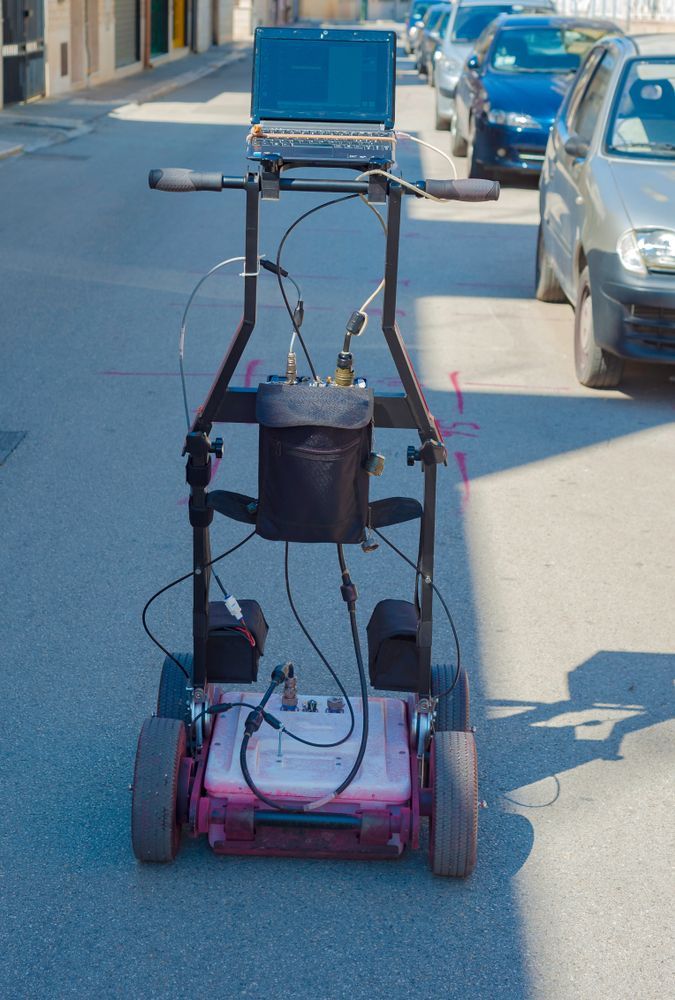
A cart-like device on a paved road, possibly for ground surveying; it has a computer, sensors, and is surrounded by cars.
November 18, 2025
GPR USA explains how accurate subsurface mapping with GPR is, helping crews understand depth, precision, and factors that influence reliable underground data.
Person operating ground-penetrating radar on an asphalt road, device on wheels, red markings.
November 17, 2025
GPR USA explains what GPR can find, helping crews identify underground materials, utilities, and features for safer, more accurate field decisions.
3D rendering of a surface scan with a grid pattern. Color gradients indicate variations, with red representing highs and blue representing lows.
By GPR USA September 15, 2025
Learn what underground utility mapping is, how GPR detects buried utilities, and why accurate mapping prevents strikes, delays, and safety risks.
Construction worker using device on wall, viewing display on tablet.
By GPR USA September 12, 2025
Explore Ground Penetrating Radar (GPR) costs, factors that impact pricing, and how investing in your own system can save time, money, and delays.
Blue and white spectrogram of sound waves, showing frequency and amplitude over time, with horizontal and vertical lines.
By GPR USA September 10, 2025
Discover how deep Ground Penetrating Radar (GPR) scans in concrete, soil, and geological surveys, plus the factors that affect penetration depth.
Construction worker using a suction tool on a concrete surface outdoors, wearing safety gear.
By GPR USA September 8, 2025
Learn how Ground Penetrating Radar (GPR) works, its applications in concrete scanning, utility locating, and geotechnical work, plus the benefits of owning GPR.